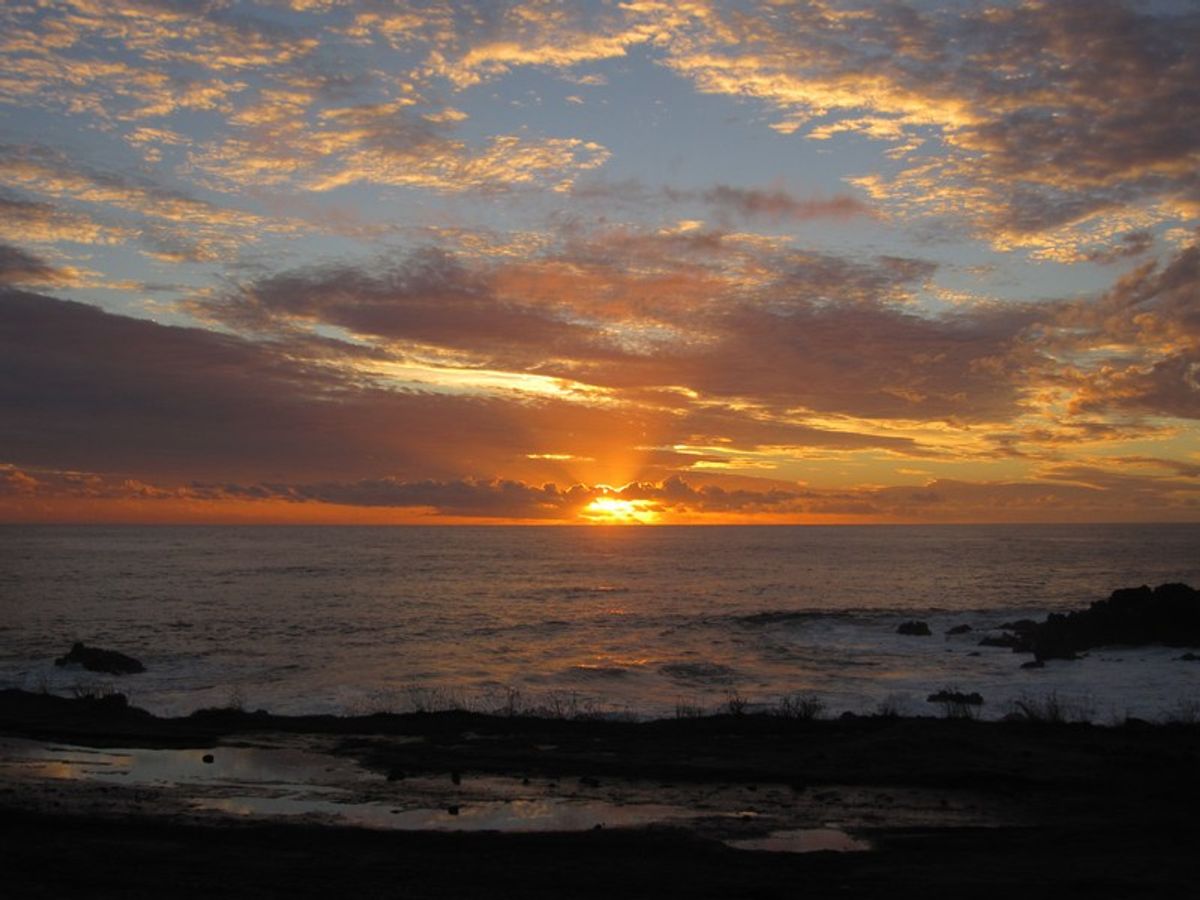
Easter Island Moais = Best Lawn-Art Ever?
Where have we been? Great question. After the arrival of the Cheez-its, we had to leave the country. Our 90 day tourist visa was running out rapidly, so we decided that we would head to Chile. I mean, it is the closet country, easiest to get to, and most convenient. So that part of the decision was easy. The tougher question was what to do in Chile? What part to go to? Should we go wine tasting? Maybe some rock climbing? See the incredible Atacama desert? No sir, it was to the most remote part of Chile possible, Easter Island. Also known as Rapa Nui, Easter Island is in the middle of nowhere. 1300 miles from it's nearest neighbor, the Pitcairn Islands (who only have 50 people living on it). It's about 2400 miles from Santiago. So, that's about 5 and a half hours in a plane that won't see land from the time it leaves until the time it arrives. That's a lot of ocean to cover.
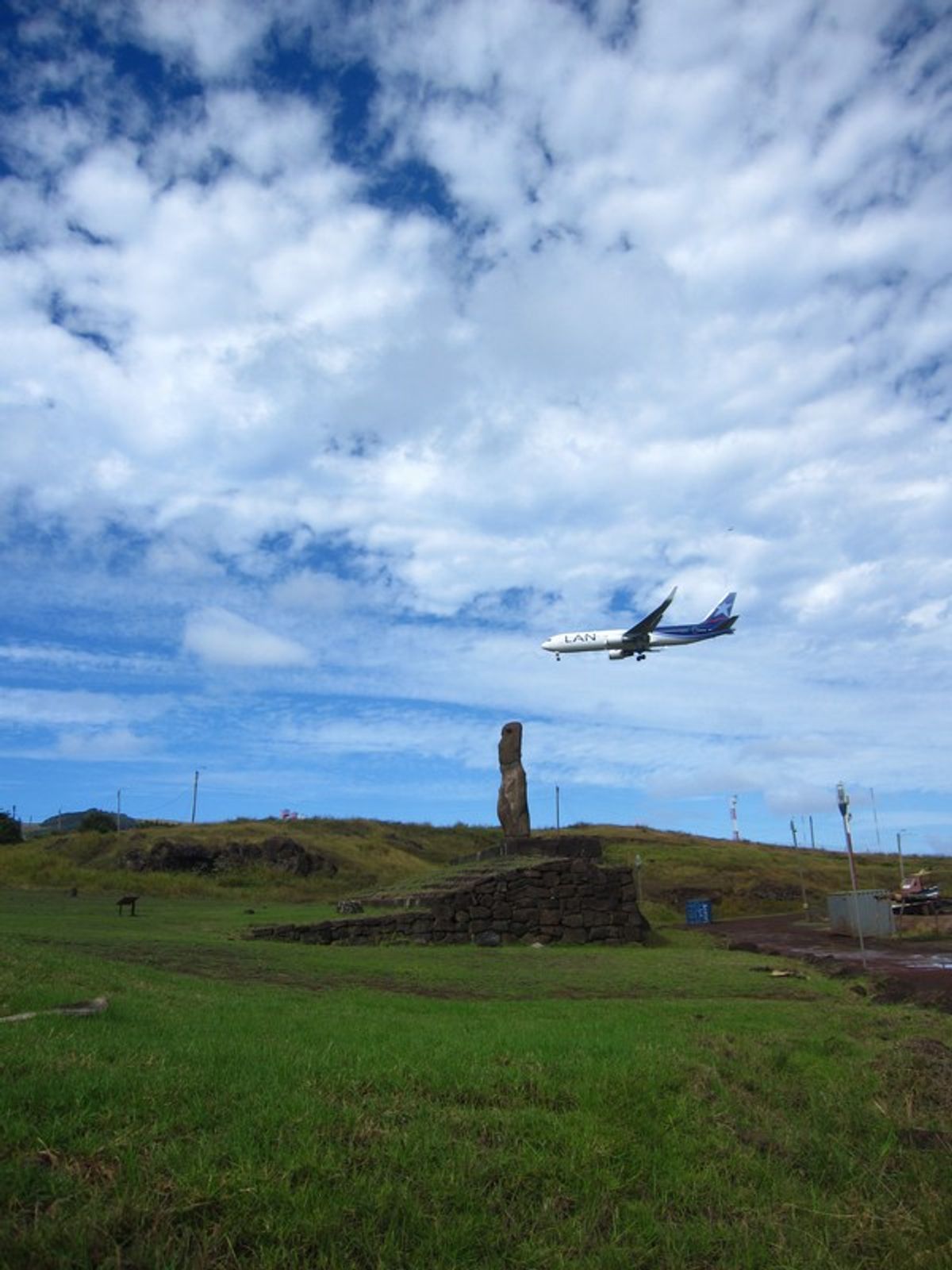
But first we had to get there. The overnight bus from Mendoza to Santiago ran 2 hours late, predictably. So we hightailed it to the Santiago airport. It was still a disaster scene after the earthquake, but a managed disaster. They had setup an emergency arrival and departure gate in huge permatents. After a couple of signs here and there, people to point you where to go, and finally, through a whole lot of confusion, we made it to our plane. 5 1/2 hours and 3 movies later, we arrived on the tiny island in the middle of the south pacific, considered one of the most remote places in the world. I don't know what we expected, or if we even had a clear idea of what to expect, but the trip was fantastic.
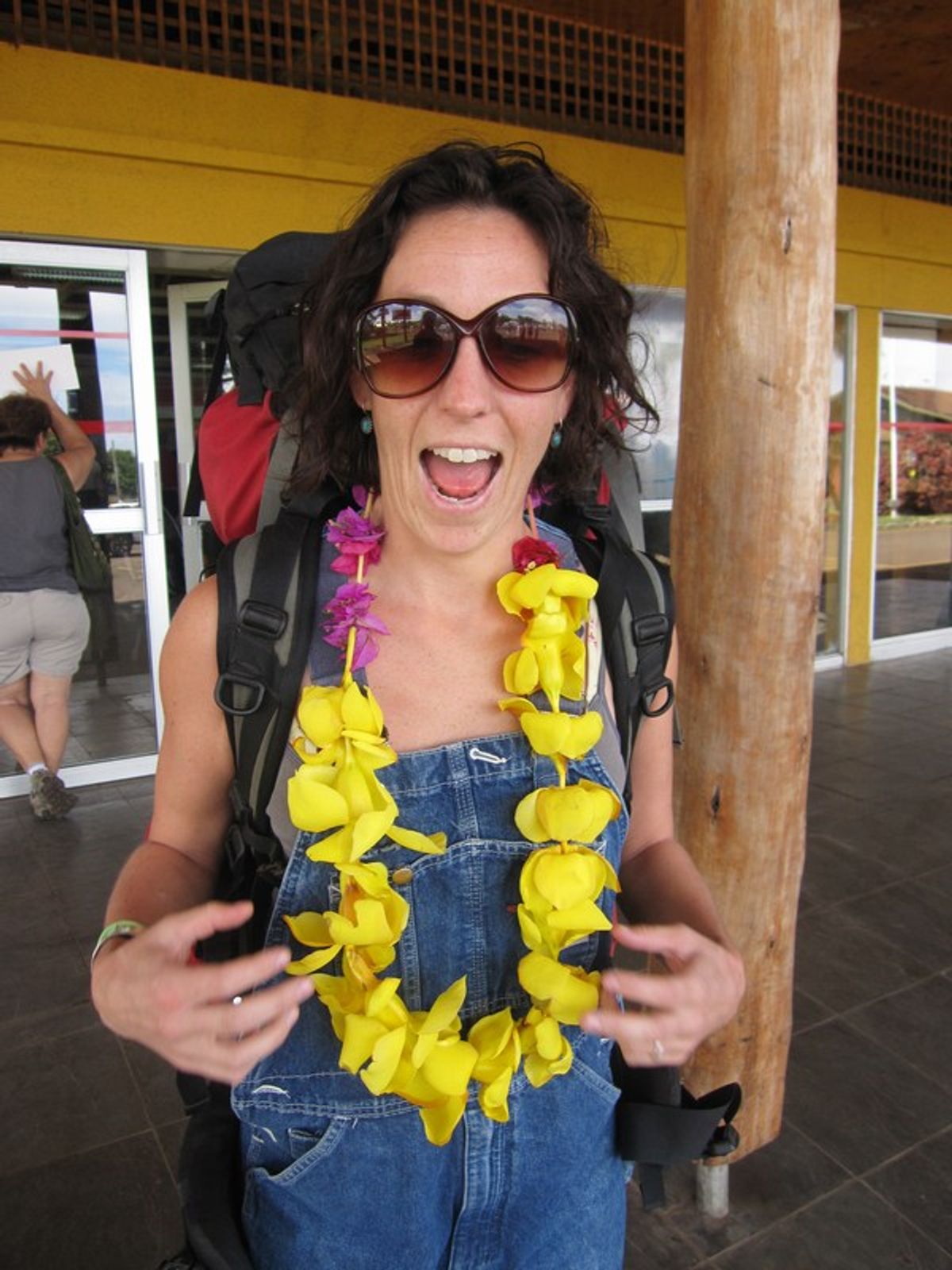
We walked out the door of the airplane and the first thing Erin said was, "It smells like Hawaii." The Hawaii I knew was the crushing traffic of Honolulu, but whatever that smell was, it smelled great. We walked off the runway and through the airport where we saw our name on a little whiteboard. So we went and checked in, where they gave us some leis. Erin was incredibly ecstatic, demanding that we take a picture immediately. This was just a hint of what was to come. We were there 4 days and managed to take 340 pictures. I'm pretty sure that's a new record for us, with the possible exception of African safaris. I was dead tired from the overnight bus and plane flight, but Erin was running on pure adrenaline. We quickly setup camp and went to explore a bit of the island.
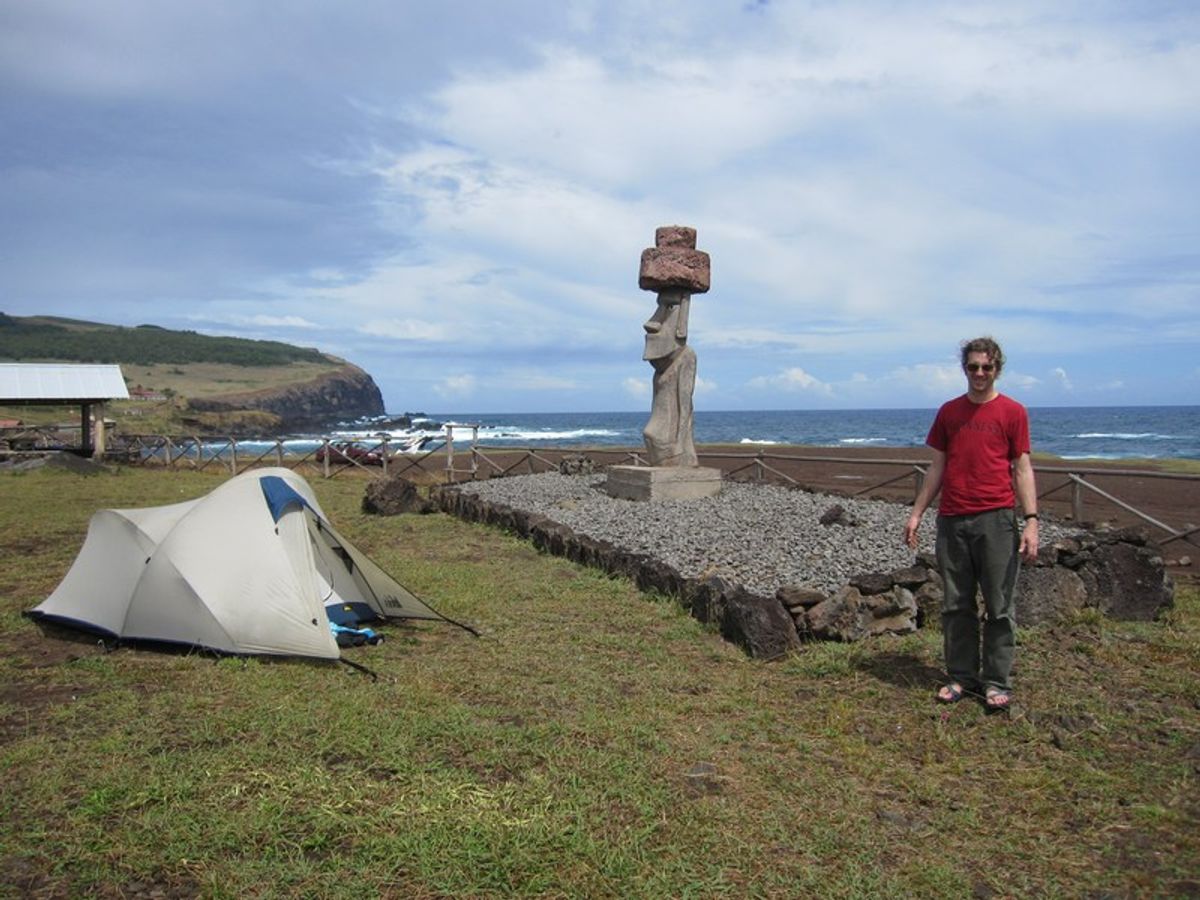
The town of Hanga Roa, as you might imagine for an island with 4,000 inhabitants, was small, but the major roads were paved. These things became more and more amazing when you start to understand the remoteness of the island. All the tar and cement for each inch of paved road had to be shipped in via boat, which had to dock in a small, inhospitable little port. The main road of town had standard island services.
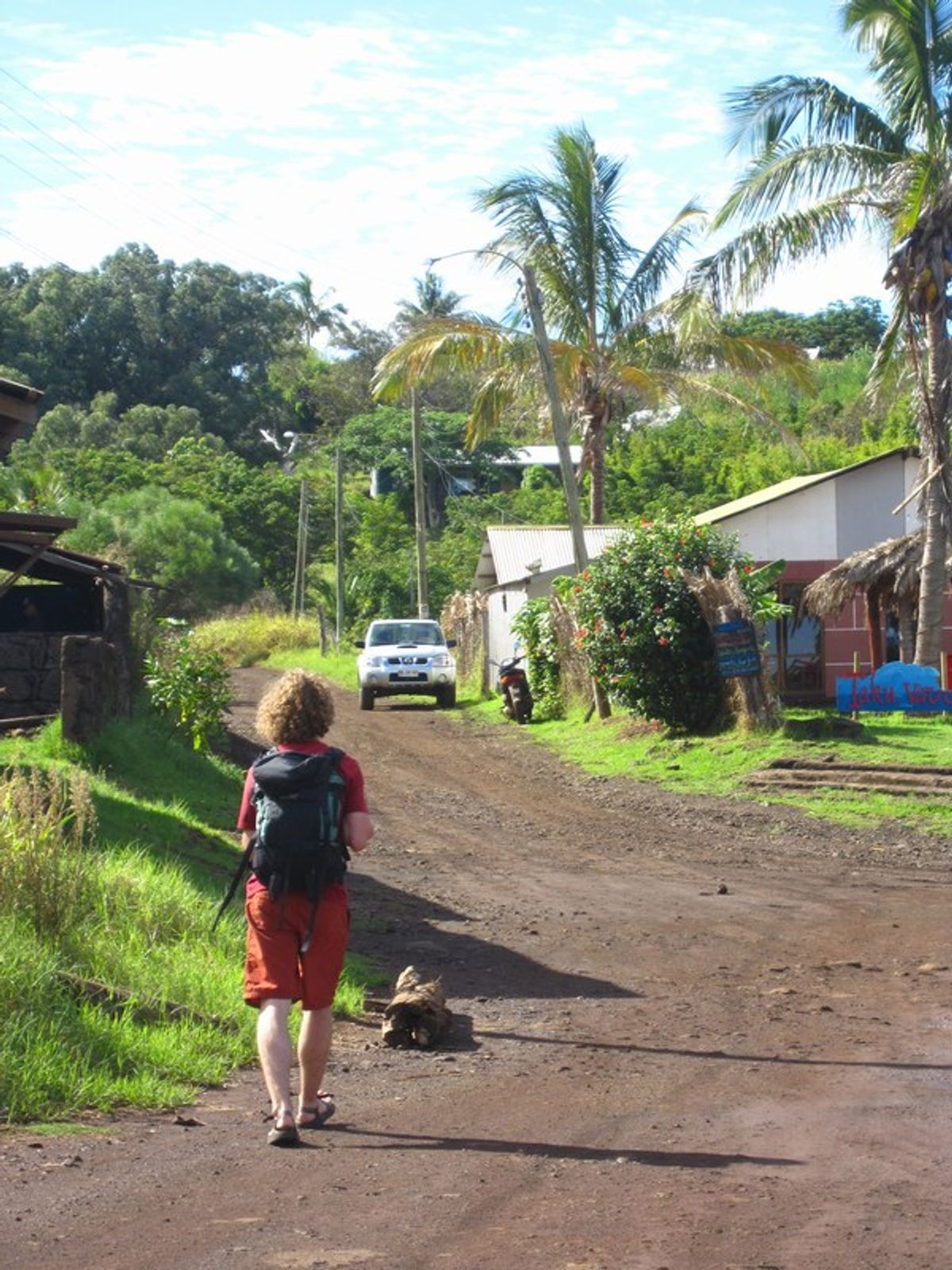
Rows of scooters, quad-bikes, motorcycles and jeeps ready for rent. Tour services, boat rides, scuba centers, seafood restaurants and some shops to pick up the necessities that were forgotten, left or snatched by airport security. And let's not forget all the shops providing endless amounts of souvenirs so that you will forever remember your visit. We settled on a little place to grab some lunch and figure out a plan of attack. 3 large empanadas, a small salad, two beers and US$50 later and we were off to see the museum.
Getting to the museum turned out to be a bit of a hike. But it was a much needed first stop before we went out to see all the moais and ahus, it helps to get a little acquainted with what they are. The ahus are the platforms that things go on or altars. There are a wide variety of them, but mostly when you see a big pile of rocks all put together in a grouping, it's an ahu. There's 313 of them on the island, and they're pretty distinctive. The moai, on the other hand, are the statues that sometimes went on top of the ahus.
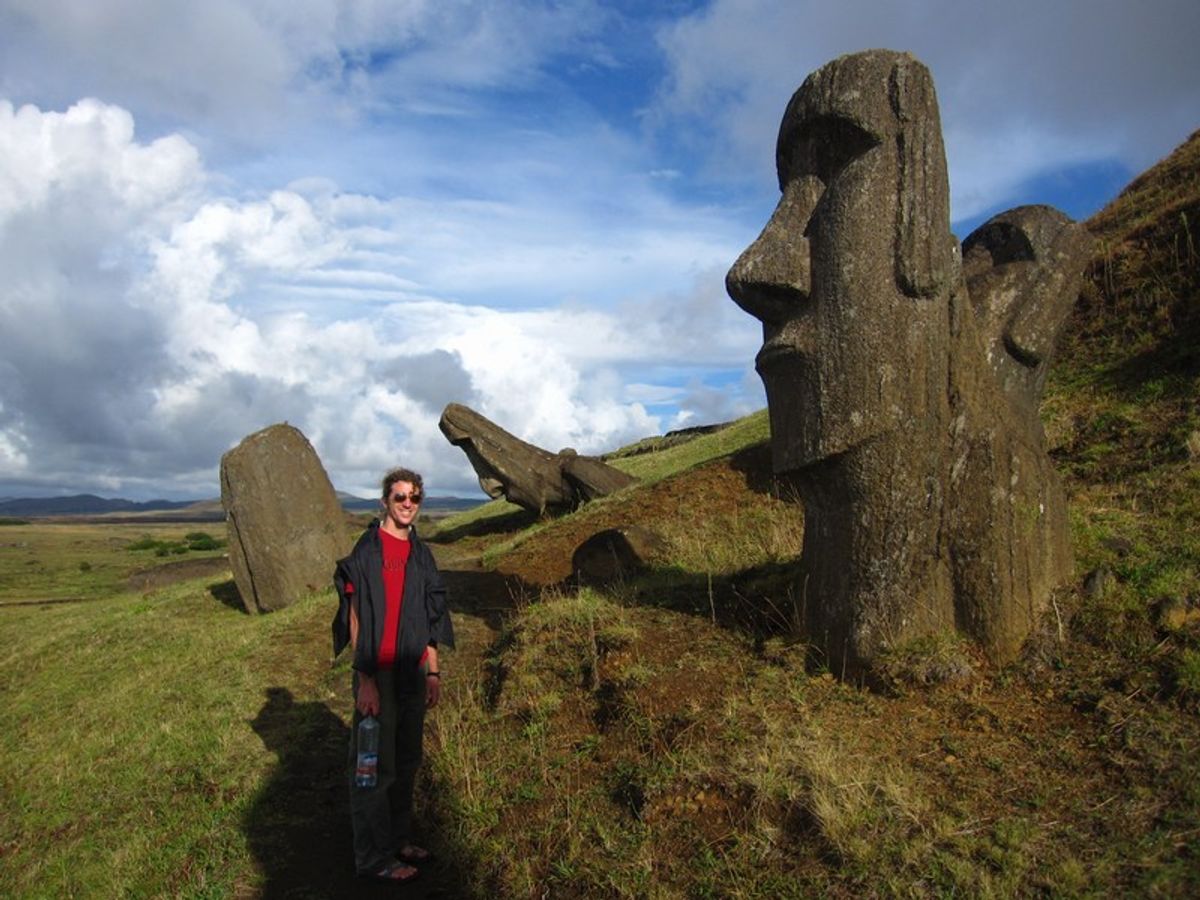
These are the gigantic heads that go on postcards and National Geographic magazines. These can be huge or just plain big, but they are always impressive. It's the reason Easter Island is famous. The museum also explained about the culture a bit and the history of European explorers.
Even though I was dead tired, it was great. However, I needed a little pick-me-up, so we stopped at a little cafe where I ordered a guava-pineapple smoothie. The lady behind the bar had apparently never mixed juices before, so she was very hesitant to sell it to me. Saying that she couldn't guarantee how it would turn out. I assured her that it would be fine. (It was.) On the walk back to town we passed a number of ahus and moais, most restored. It was incredibly beautiful to see the large statues lined up together like a row of military, backs to the ocean. The rain was about to start, so the dark clouds made the ocean nearly black, crashing on cheeky volcanic rocks sticking out of the water. We rented a red jeep that night, went around to grab supplies for the next day, then went to bed early.
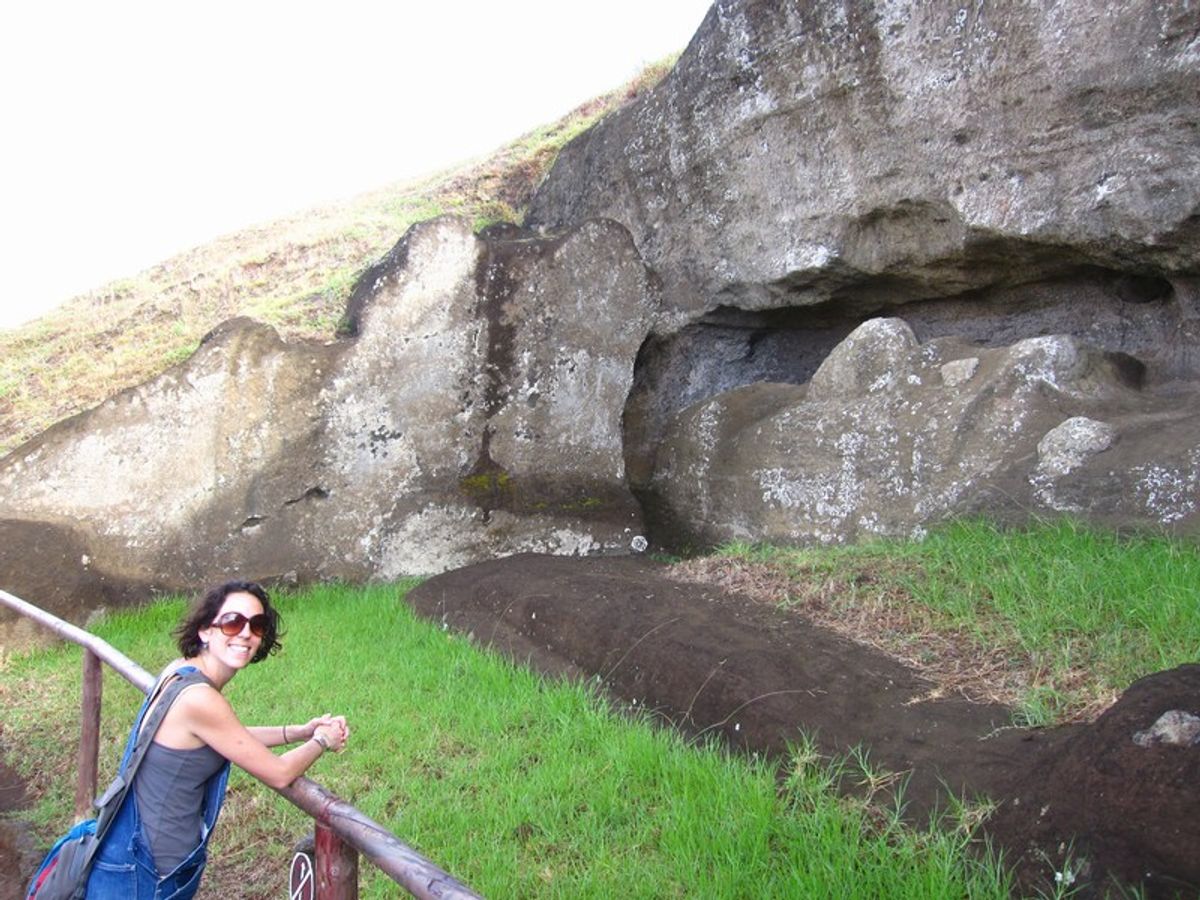
The next morning we rose up with the sunrise and got moving. I know it sounds like that's really early, but the sun rose around 8:30am and set around 8:30pm. So we can't be credited with being gung-ho about getting up and out. The drive to the stone quarry was a quick one, maybe 45 minutes. Since there was no rush, we stopped a number of times to take pictures of the archeological sites along the way. Even with taking our time, we were the first tourists to arrive at the quarry, called Rano Raraku. It's always wonderful to have an entire site to yourselves. Everything becomes a little more beautiful, a little more serene, just a little more in general. It was magnificent. There were moais everywhere in various stages of completion, strewn about haphazardly like a yardsale for the coolest lawn-art ever. All you had to do was look at the side of the volcano and carved heads came into view. Paths where they were dragged from their carving spot became apparent like a magic eye picture.
Of course, other tourists came around soon enough, and we left the site to them as we went down to the row of moais on the beach called Tongariki. This is one of the more famous collection of moais on the island. 15 moais in a line, better restored than most others.
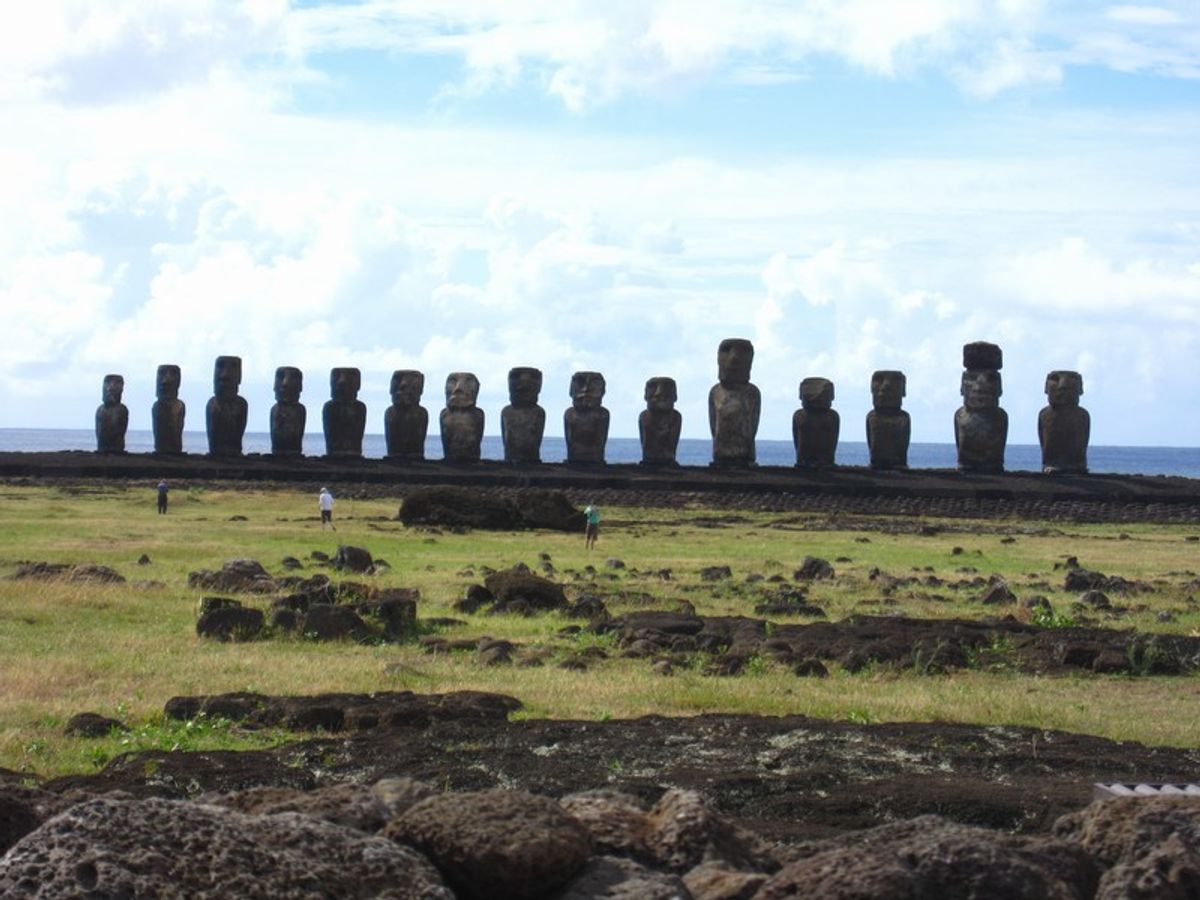
With their backs to the ocean, this is a favorite location for sunrise photographers. The interesting part to me was also the restored ahus. Most are simply put back together a bit, piled up and shaped to the way they think they were before the tradition died out in the 17th century. But at this particular site, they had placed the rocks of the ahu in a triangular pattern. In addition, it was impeccably maintained, so there was no grass to block the view or even remind you that this was a reconstruction, not an actively used location.
We moved on from there to the beach of Anakena, where we were planning on staying until we were to head back.
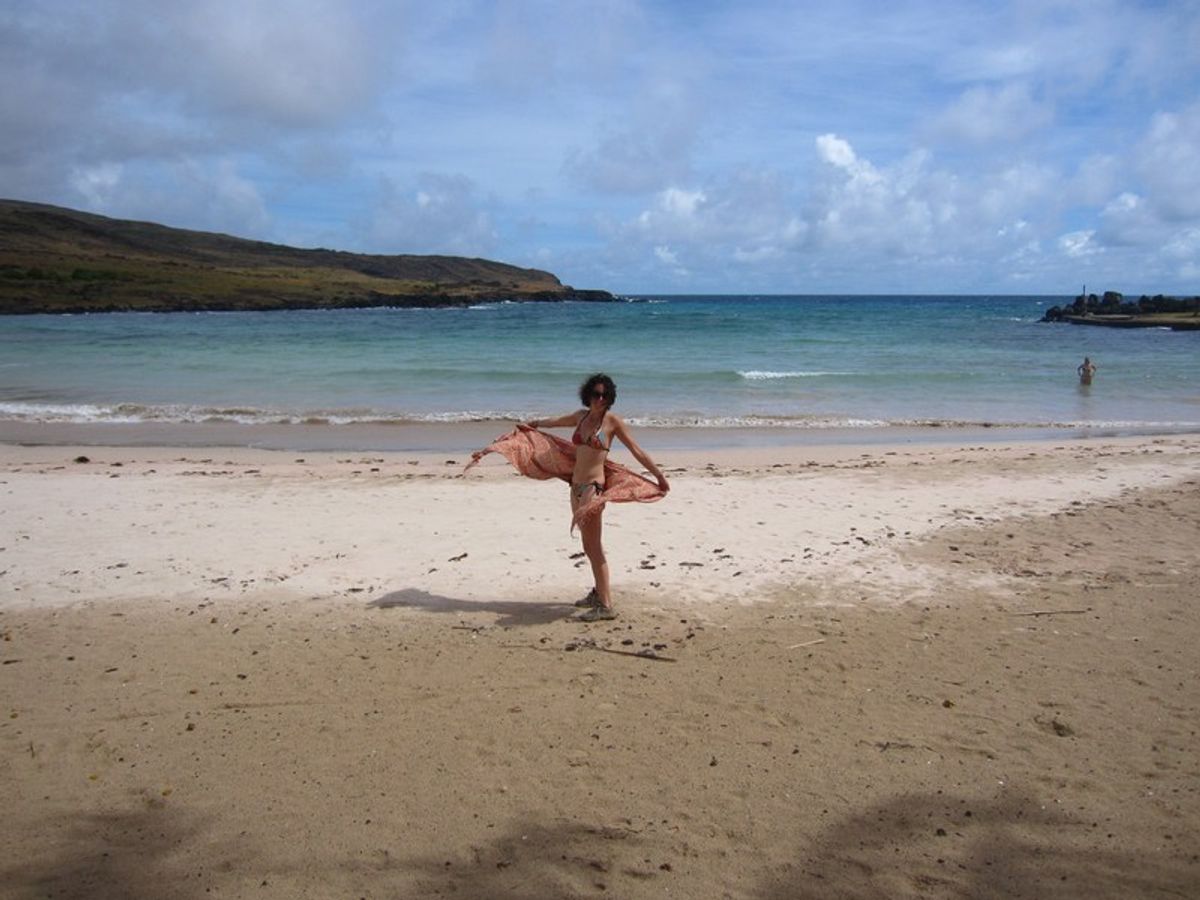
A quick dip in the gorgeous ocean and we went to get our provisions, which consisted of a large bag of Lays potato chips (waves, not original). In addition to this heart-healthy meal of fried tubers, we went to a cabana to have a beer and a kabob. A more well balanced diet could not be prescribed.
We didn't really know what to do with our car, since we had it rented until 7:30pm and wouldn't consider returning it before that. So, we drove up to Orongo so that we could look into fog, it was raining pretty hard at this point, which was pretty exciting but not really educational. So from there we purchased some more supplies, drove them to camp, then returned the car.
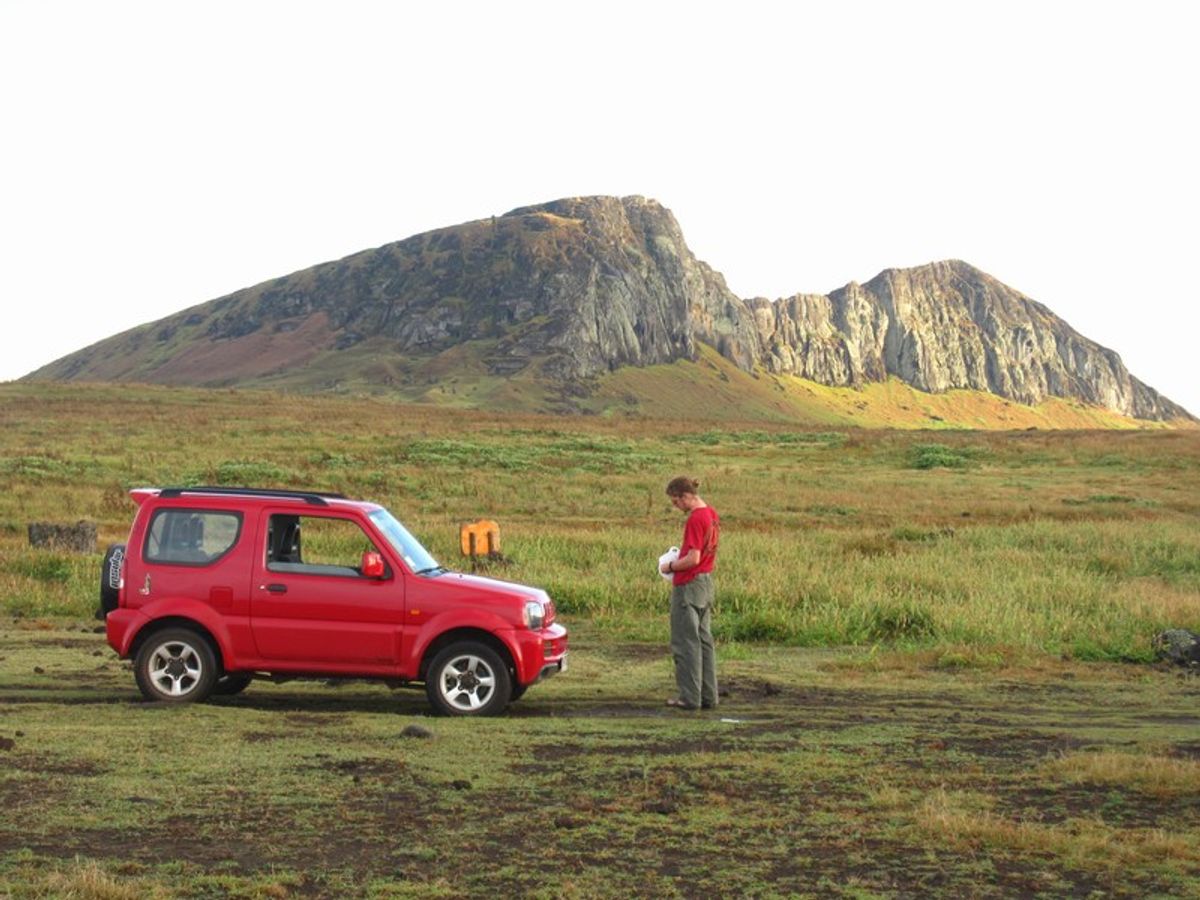
Erin and I laughed at our hypocrisy since we talk about wanting to live in a place with public transport, yet every time we hop in a car we're incredibly excited to just drive around places. We were going to cook that night, but we were at a restaurant when the rain started, so we just decided that the prudent thing to do would be simply stay there and eat delicious ceviche. Some decisions are tough, some are easy. This was an easy decision.
Friday was the next day and it held a whole host of surprises. The first surprise was that our plane might be cancelled. Apparently, it's a regular practice for LANChile to schedule a flight from Easter Island and then cancel it if there's not enough people. After all, where are these people going to go? Catch the other flight? But, luckily for us, it was the Saturday flight that was cancelled, not our Sunday flight. But it did take some time to figure that out. So when we finally started on our hike to Orongo it was a little later than we wanted. Luckily, however our Kiwi tent-neighbors had a car and gave us a lift up to the top, which cut our hike exactly in half.
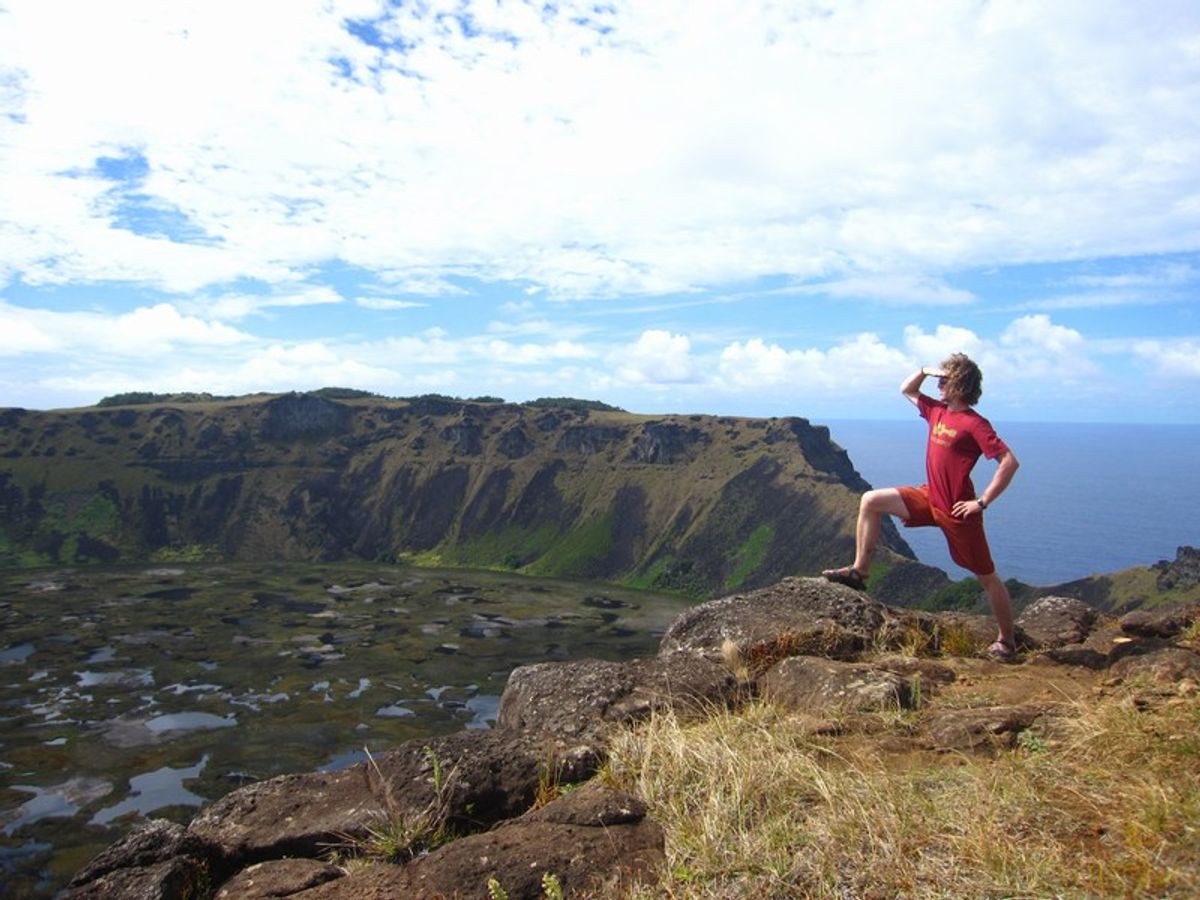
Orongo turned out to be my favorite part of the island. It had a perfect crater, filled with stagnant water that had been there for so long that this crater had developed endemic species that were found no where else. There was a large break on the oceanside of the rim, which just helped remind you that this was right next to the ocean. It was simply fantastic, one of the treasures of travel that drop your jaw and hurricane your mind and imagination. I could have marveled at that crater for hours. There is also an archeological site on top of the volcano rim, which is the center of the "Birdman Cult."
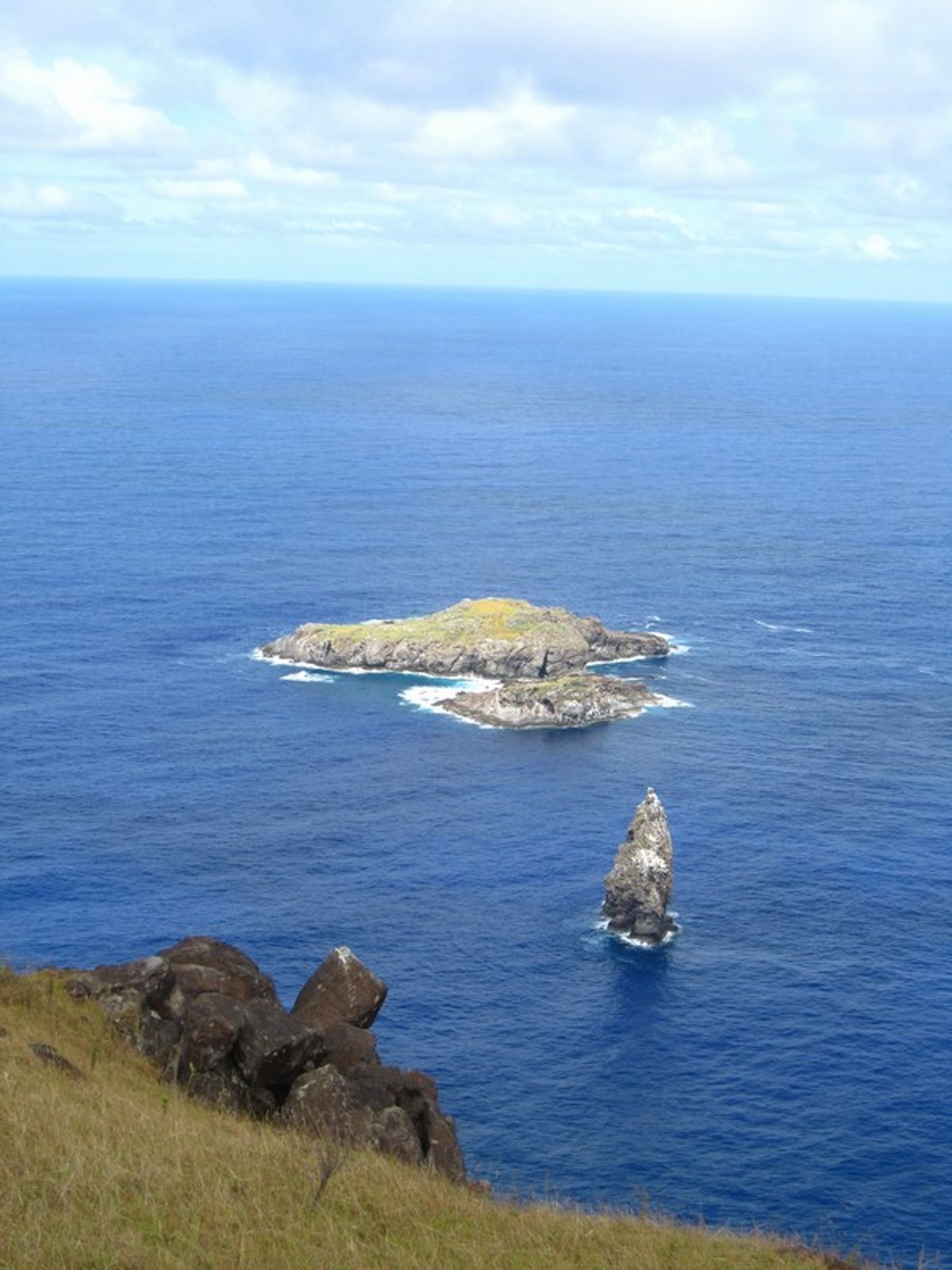
There were meticulous dwellings built into the mountainside, apparently used to watch the competition where men swam shark-infested water, stole a bird's egg, swam back and climbed the volcano. Looking at the islands, the slope down to the water and the rocky shore was more than enough to convince me that the competition was incredibly brutal. I hope the reward matched the risk.
The hike down afforded us a view over the entire island: the ocean laying siege; volcanoes and craters scatter about; grazing plains and standing moais. No complaining here. We returned to camp to share some dinner and drinks with our Kiwi friends and Steve the Saskatchewan.
Saturday was our last day on the island, and we wanted to make it count. So we went for the big hike, which was 20km (12.5mi) from Anakena to town. But first, breakfast. We arrived into town at 9:45. This is a tourist town, so there should be some place to grab a quick bite to fill our bellies and give us the energy for the grueling stroll. There was one place open. So we ate our US$25 breakfast, thinking that the last time we had a $25 breakfast there were a couple of mimosas involved, and certainly not NesCafe.
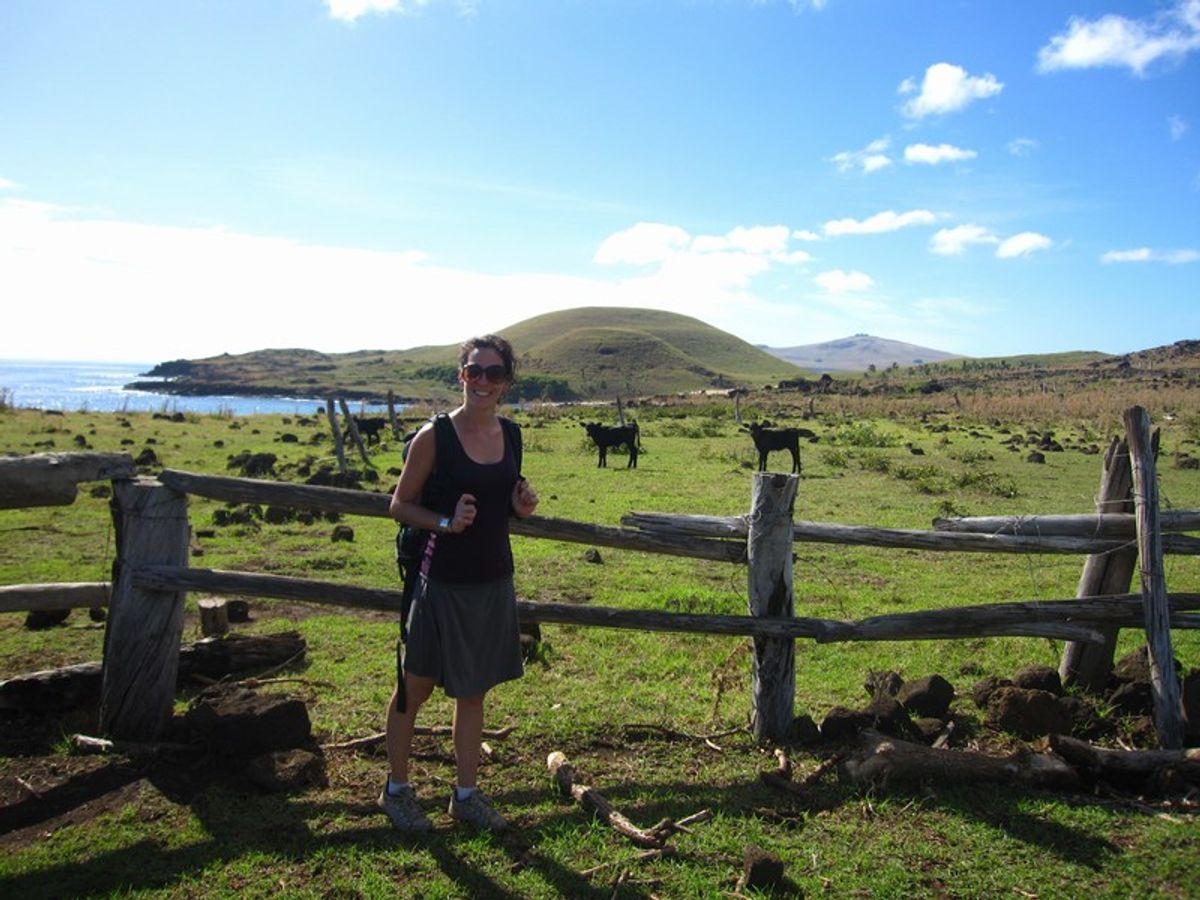
The hike was strange. Once again, didn't really know what to expect. Isolation was clearly on the menu, but what else? The answer is horses and cows. Not a single person, but plenty of our four legged friends. Erin was carrying a two foot stick for protection. After all, what would happen if a cow had to be milked or a horse petted? The stick would protect us.
Trees were very few and far between. We saw less than 20 trees in the first 5 hours of the hike, all being occupied by ungulates. The other surprise was thistle. It was everywhere! Dead thistle 6ft high with pokers that could really hurt. Fortunately for me, I was carhartt protected. While, Erin was simply cotton protected to the knees.
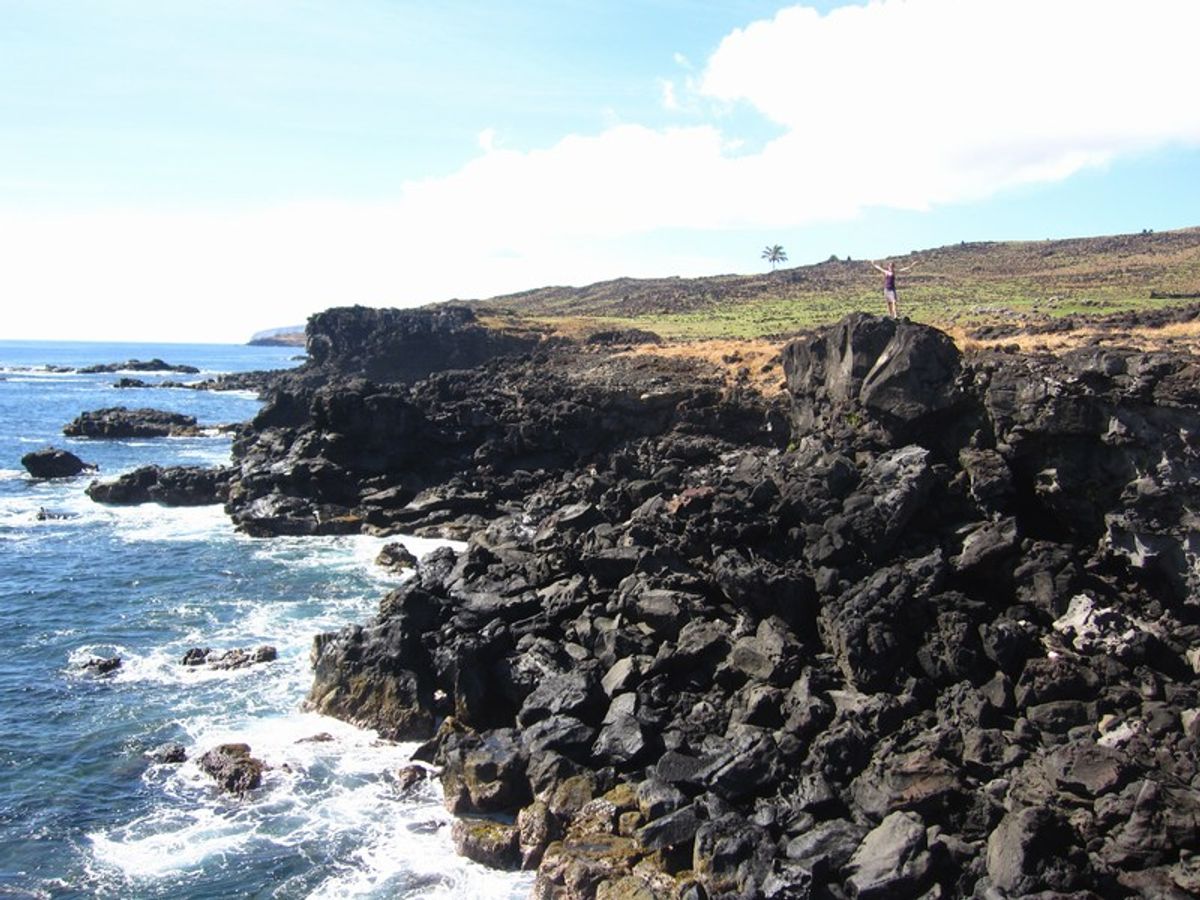
Of course, the real jewel was being able to walk along the coast. It was high and foreboding, with mostly steep cliffs going down to sea level. Basically these cliffs could have been the inspiration for The Most Dangerous Game, or Treasure Island, or some of the other classic adventure novels about remote islands with strange happenings. (Perhaps I'm actually thinking about the secret island from Walter Farley's Black Stallion series. I'm pretty sure I read everyone of them.) The cliffs were big, black, volcanic and imposing over incredible blue water crashing onto them. We found a couple of blow holes, spraying water maybe 20 meters into the air with a sound like jet engines.
We had been told by our Kiwi tent neighbors to watch out for a tunnel that would take you down into old lava tubes, leading to exits in the middle of the cliff. These were caves that were used by the locals for years and years. So we made sure to bring a headlamp and keep a keen eye out for the entrace. We figured that the entrance would be fairly well marked, but we had been walking for so long that we thought we had passed it. Not so. We came to one cave system, checked it out, and thought it was pretty cool, but not really everything we had hoped for. Soon, however, we came to the real deal. Ana Kakenga (Cave of Two Widows) is about 50m long, goes from a small start to two major openings. It was a fun and unique experience.
The night finished with song, dance and cultural food. We had been searching for a cheap option to taste some local food and see some local dances without success. We were nearly ready to pay US$60 apiece for the privilege,
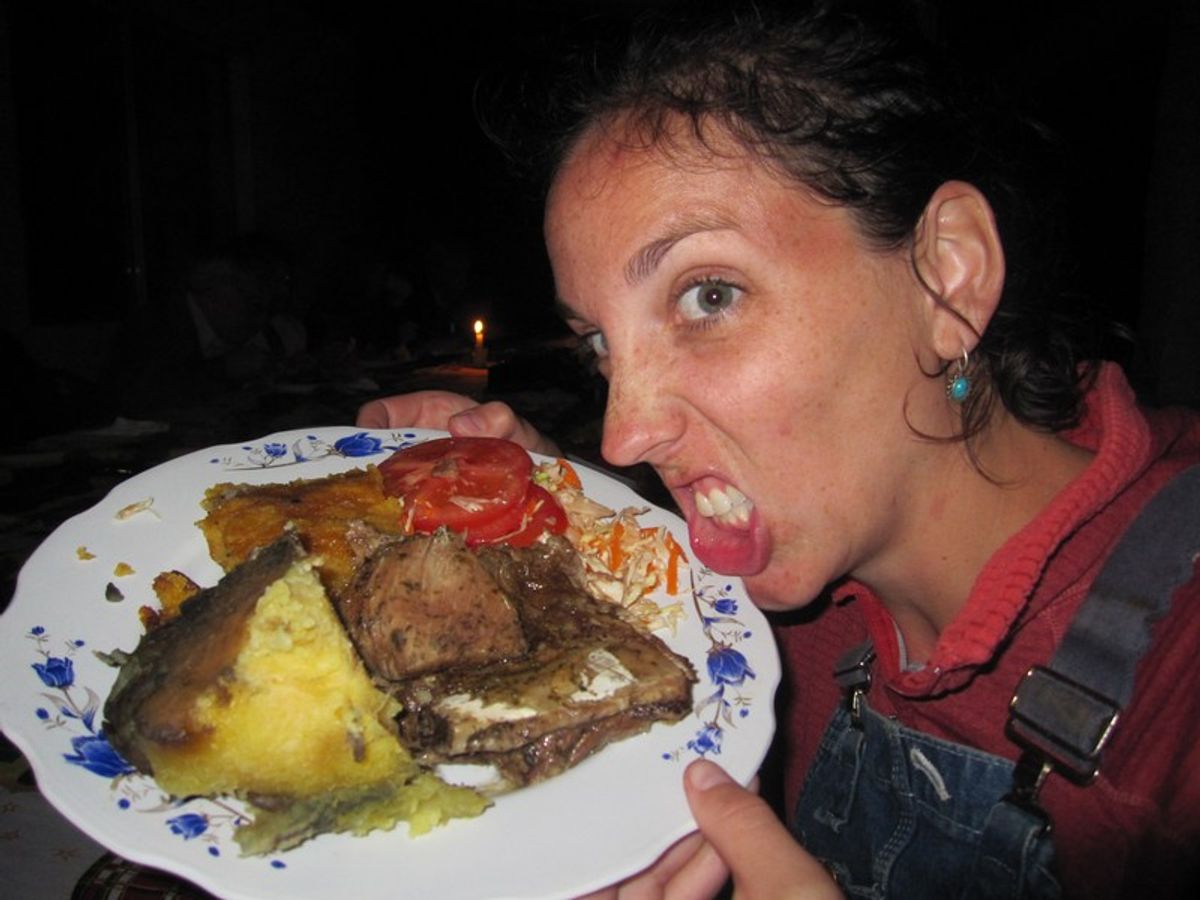
but when we asked our hostel owner, she was so embarrassed by the price that she told us about the other option at half the price, and including a drink. So that's where we went. There were four of us as Steve the Saskatchewan and Marciela the Psychologist joined us. The pisco drink started us off right, holding until the food was ready. They pulled back the black plastic tarp and the banana leaves to reveal an entire pit of meat ready to be inside my belly.
Next was the dancing. Since it was raining outside, the dance would happen in the living room. We piled in, everyone of the 40ish people, to find our seats. My wallflower position was back against the door, while Erin's was sitting cross legged in the front. Front and center would be an understatement. Every time I looked over, or motioned that she take a picture, the dancer's loin cloth would nearly hit her in the face. The pictures were at very strange/awkward angles with details of the stitching.
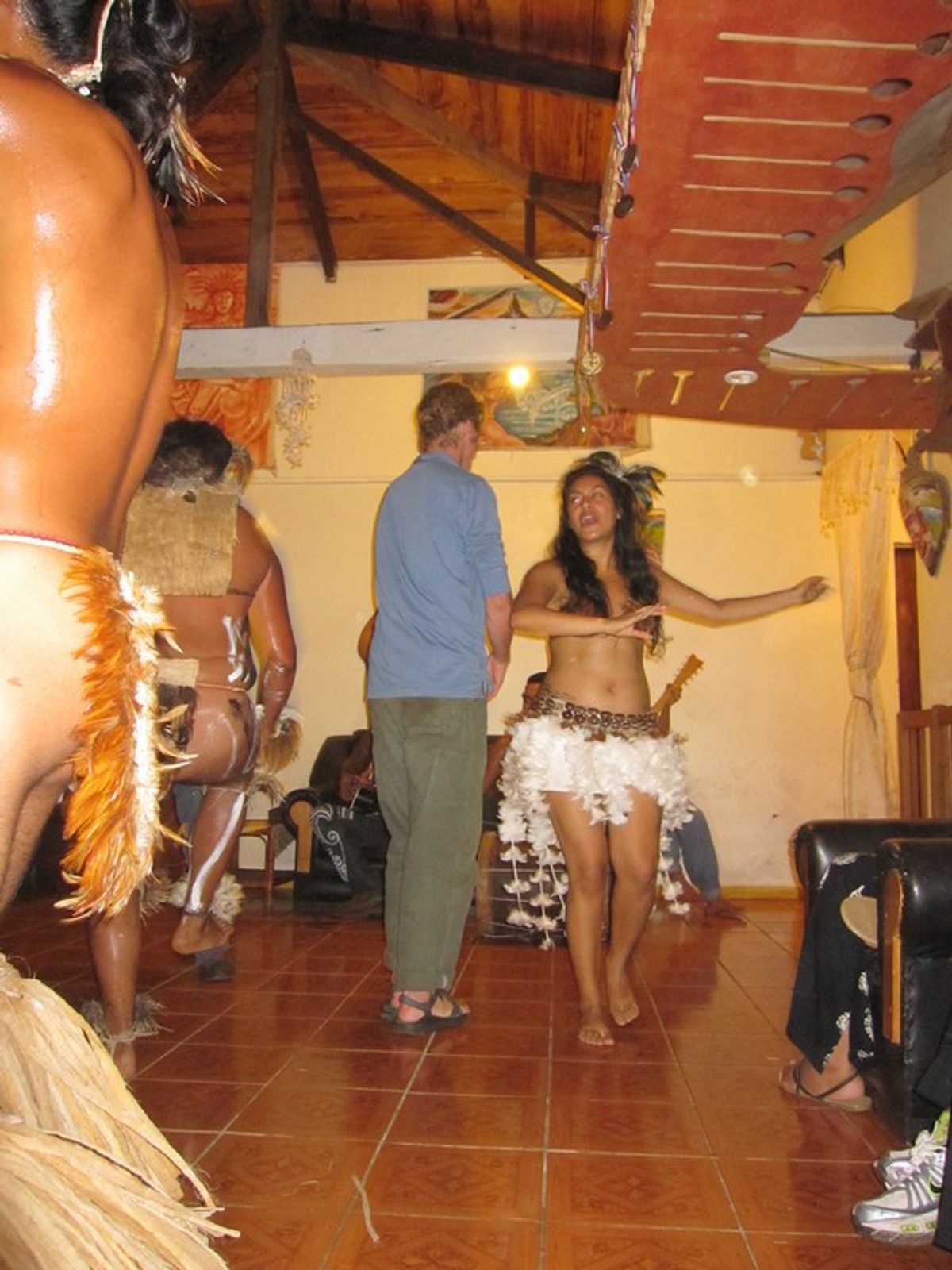
Okay, not really, but it was pretty funny. Of course, I got my come-uppins when the hulu-esque dancer came over and dragged me to the dance floor. Yes, I had the wonderful opportunity to finish our stay in Easter Island with shaking my butt awkwardly, spinning around in circles, trying to keep my eyes off the coconuts and being generally embarrassed. It was good. It was fun. It was a perfect last night on the island.
The next morning was a quick empanada breakfast before we jumped on the plane to Santiago. It was an uneventful crossing back into Argentina, arrival into Mendoza and taxi back to the apartment. The only memorial part of the journey back was looking at Erin to say, "This is our last border crossing before we enter the US." A strange realization.